
EndedOpening Address by Guest of Honour, Senior Minister of State, MDDIJanil PUTHUCHEARYOpening Address
EndedCoding with AICHANG Sau SheongKeynotesData and AI
This talk explores the landscape of AI coding assistants, from code completion tools to chatbots, and examines the implications of their adoption. The presentation will also highlight GovTech’s efforts in driving the adoption across the sector
EndedSolving for Scalability: The Role of Platforms in Engineering EfficiencySuthen Thomas PARADATHETHKeynotesApplication Innovation & Developer Experience
EndedPlatforms: Perfectly Portable Productivity Propellants?Gregor HOHPEKeynotesApplication Innovation & Developer Experience
Learn about the magic of developer platforms and how they defy the IT laws of physics: platforms spur innovation despite harmonization; they speed up development while assuring compliance; and they reduce cognitive load without restricting choice. But building such an in-house platform, or even deploying one, is far from easy. Gregor packages his experience in building platforms into a series of mental models and metaphors that will help you understand design decisions and trade-offs. You'll also find out how platforms are related to cars, submarines, and fruit salads!
EndedGotchas and Hurdles in the Journey to Improve Developer/Engineering ProductivityCHANG Sau Sheong, Gregor HOHPE, Rachel LAYCOCK, Dominic CHANPanel DiscussionsApplication Innovation & Developer Experience
EndedEmpowering Change: Driving Effective ICT Governance Through Policy as CodeHunter NIELD, Eugene LIMLightning TalksDigital Trust and Cybersecurity
In a rapidly evolving technological landscape with heightened security concerns, automating governance processes has become essential for organisations. This presentation explores how the Singapore Government has embraced an innovative approach to automate policy enforcement and streamline governance processes through technology. Through real-world examples and practical insights, attendees will discover how organisations can leverage Policy as Code to drive significant change, improve decision-making, and succeed in the digital era. Attendees can expect to gain valuable knowledge and insights on how to effectively implement ICT governance strategies using Policy as Code principles."
EndedTeam Synergy: Measuring and Enhancing Software Development EfficiencyThao DANG, Nouman MEMONLightning TalksDigital Culture
Agile Software development is a fun filled collaborative team sport that promotes adaptability and flexibility as the first-class citizen, but we continue to see challenges across multiple industries such as: - Lack of collaboration, resistance to change in adopting new ways of working - Ineffective and manual approach towards building software, accumulated shortcuts leading to massive and unmanaged technical debt - Inadequate ways of measuring productivity and efficiencies - Slow feedback loops - Command and control ways of working - Lack of engineering practices, inappropriate use of tools adding to burden -Last, but not least, following agilefall The goal of our talk is to share some practical ways to overcome these challenges through continuous delivery practices and meaningful metrics, and where AI can be leveraged to enhance efficiency. We will also talk about some blind spots e.g. misunderstood or misuse of matrices could lead to unintended consequences. Whether you're a developer, team lead, or manager, you will leave with a deeper understanding of meaningful metrics, practical engineering practices, and actionable insights to enhance their team's productivity and collaboration.
EndedCreating Fast-Feeling Web AppsTrung VOLightning TalksApplication Innovation & Developer Experience
In web development, perception is reality. A website that feels fast is fast, no matter what the metrics say. Discover the art and science of perceived performance in React applications. We'll explore proven patterns and techniques used in large-scale codebases to create lightning-fast user experiences that lead to happier customers and higher conversions. Learn how to make your React apps not just performant, but feel instantaneous to your users. Topics include reducing/removing layout junk, better use of loading indicators, pre-fetching resources, leveraging the browser cache, image loading optimisation, and much more.
EndedRecursive Machine-Learning Site EvaluatorChloe LIMLightning TalksData and AI
With increasing digitalisation, citizens are also increasingly vulnerable to malicious actors online. With the rise in scam cases in recent times, GovTech seeks to keep citizens safe from possible scams through the development of the Scam Website Classifier (rMSE), which automatically evaluates potential scam sites using their technical attributes and enables the Government to substantially scale its anti-scam efforts through the use of machine learning.
EndedProject TITAN - An Alternative to Rule-based SAST ScansANG Han Wei, Martin WEYSSOWLightning TalksData and AI
Accurate detection and mitigation of vulnerabilities found in application source code is part of the shift-left paradigm embraced in Whole-of-Government (WoG), where security efforts are initialised at earlier stages of the software development lifecycle. Given the volume and frequency of changes made to the codebase, manual reviews are impractical, not to mention inefficient, laborious and highly dependent on the experience of the reviewer. This has pushed for widespread adoption of Static Application Security Testing (SAST) tools to automate the process. Commercial-off-the-shelf SAST tools analyse the input code with a series of rules that are crafted with generic rules that are neither precise nor have a high recall. This led to more false positives than can be reasonably triaged and managed by the development team, while missing multiple vulnerabilities within the source code. This makes the SAST tool hard to use and depend on for important and actionable warnings as the accurate findings are few and far between, buried within the long alert list - a proverbial needle-in-the-haystack situation. The abysmal performance of commercial SAST tools can be partly attributed to their inability to keep pace with the increasing complexity of modern software applications that hinders a precise modelling by the SAST tool. To address these challenges in both source code modelling and poor detection performance, Project Titan aims to leverage the ability of LLMs to capture source code semantics to build a just-in-time vulnerability discovery tool. Preliminary studies by the team have pointed to the potential of LLMs to be an effective, language-agnostic platform for such a task. This solution will build on general-purpose and open-source models fine-tuned for the task of vulnerability discovery with publicly available data, before a contextualisation phase to adapt it to WoG source code. Project Titan is an attempt by the team to work on a multi-faceted challenge in the form of developing a large-scale, contextualised vulnerability detection tool powered by LLMs. This talk aims to highlight the thinking and process behind the tool’s conceptualisation. It will also include a section on the challenges that the team encountered during the development process, and the iterative nature with which these challenges have been addressed.
EndedOne-Stop Payroll: Simplifying Business Compliance with APEXYAP Ghim Eng, LEONG Shi WeiLightning TalksDigital Culture
Every year, Singaporean-registered companies have to submit the salary data of their employees under the Auto-Inclusion Scheme (AIS) to the Inland Revenue Authority of Singapore (IRAS). Every quarter and every year, they also need to update the Ministry of Manpower (MOM) on changes to their workforce composition and complete a labour survey. Every month, the Central Provident Fund Board (CPFB) requires employers to submit details of their contributions to their employees. The data required for filing to the different government agencies are all stored in the companies’ payroll or HR software. How might we integrate with the HR and payroll software so that the submission process can be streamlined, reducing the manual efforts and saving employers valuable time and resources? Enter APEX, which could consolidate APIs from different agencies on its platform and facilitate secured access and integration by developers, including the HR and payroll software vendors. By housing all required APIs and submitting necessary information to the three agencies, APEX eliminates the need for manual submissions, reduces administrative workload, and promotes compliance with payroll-related regulatory obligations.
EndedEmpowering HDB's IT Transformation: Unifying Distributed Cloud Systems Monitoring with StackOpsScott Nathaniel LIM, TAN Wee KiatLightning TalksCloud Technology
The Housing and Development Board (HDB) is actively pursuing its IT Transformation goals by leveraging the Cloud to achieve scalability and availability. As part of this initiative, HDB has adopted a distributed approach in designing its cloud architecture, as opposed to a shared common infrastructure or monolithic technology stacks that some may adopt. This shift towards distributed systems in the cloud offers increased flexibility, enabling each cloud product to architect and rapidly develop their resources and applications based on their specific requirements. Additionally, it allows for the isolation of risks within the boundary of a defined system. This approach also facilitates the utilisation of auto-scaling and on-demand services to balance performance and costs, while minimising the risk of a single point of failure that large shared technical stacks are susceptible to. However, the autonomy of distributed products also presents its own set of challenges, responsibilities, and overheads that each individual product needs to address. One such complexity is the need for continuous application and health monitoring, which scales horizontally with every cloud product released. The lack of a 'single-pane of glass' visibility across the board can be disconcerting to the organisation when the health and performance of their distributed workload are left in the dark. To tackle this challenge, StackOps, the Singapore Government Tech Stack (SGTS) product for continuous log monitoring, has provided HDB with a platform and tools to unify logs, metrics, and traces from distributed systems. The Cross-Cluster Search capability allows HDB's Security and Enabling teams to monitor all HDB Elasticsearch clusters from a single Kibana console, eliminating the need to toggle between various monitoring platforms. Additionally, this capability provides insights into the alerts' indices of the distributed clusters, which are alerts generated based on privileged or suspicious activities processed according to Elastic's security rules. By leveraging these native Elastic security features, HDB has been able to centrally curate its own privileged activity review processes and workflow for distributed product teams, saving costs from onboarding separate tools to manage and track the completion of log reviews, while ensuring compliance with privileged activities log reviews for all teams.
EndedDesigning Success Together: UX Strategies for Facilitating Decision-MakingFalaumaina MOHD SHARILLightning TalksDigital Culture
Successful UX design is not just about creating aesthetically pleasing interfaces but also about making informed, strategic decisions that align with both user needs and business goals. This talk "Designing Success Together: UX Strategies for Facilitating Decision-Making" aims to provide the audience with the essential strategies and tools to guide clients towards making smart, collaborative decisions. This talk will highlight on 4 key topics: Understanding client needs, Design thinking, Collaboration and Facilitations, and Prioritisations.
EndedSPACE in the Age of AI: Measuring What Matters for DeveloperBrian HOUCKPlenary TalksData and AI
In the rapidly evolving world of AI, measuring developer productivity and experience requires more than just tracking output—it demands a holistic approach that captures the multifaceted nature of engineering work while keeping the focus on the driving force behind it all: the developers themselves. Enter the SPACE framework, a comprehensive model designed to assess developer productivity across multiple key dimensions. In this session, we’ll revisit the SPACE framework and explore how its principles remain not only relevant but essential in this new AI-driven era. We’ll discuss how AI is reshaping traditional workflows, influencing developer experience and why understanding these impacts through SPACE is more critical than ever. At its core, the framework ensures that the well-being of developers—the people behind the code—remains central to the conversation about productivity. You’ll walk away with practical insights on how to apply the SPACE framework to measure and improve your team's developer experience, while also navigating the opportunities and challenges brought by AI. Whether you're looking to optimize your team's focus time, gauge the effectiveness of AI-enhanced tools, or ensure collaboration and well-being in hybrid work environments, this talk will offer actionable strategies to help your developers thrive.
EndedThe Most Contentious Kanban PracticeShalom CHINLightning TalksDigital Culture
The Kanban Method is a modern 21st-century knowledge management method that produces agility and transformative improvements to organizations. Out of the six practices of the Kanban Method, there is one that is the most contentious to implement but it will bring you tremendous results. This session is delivered by an experienced Kanban Coach and Trainer who has experience in implementing Kanban Systems successfully in multiple organizations. You will learn why this practice is controversial, how it will help transform your team into a hyper-productive one with the maths to back it up, and how teams adopt this practice using an evolutionary approach. After this, you will never manage work in the same way again.
EndedNavigating the Content Deluge across Whole-of-Government (WoG) with Smart Processing and Contextual InsightsHenry LIMLightning TalksApplication Innovation & Developer Experience
In today's digital age, public service agencies are increasingly creating, receiving, and working with multimedia assets. Effectively managing this growing volume of media content is crucial to fostering a coherent information ecosystem that facilitates flexible organization, efficient discovery, and seamless exchange of these assets and the insights contained within them. In this talk, we will introduce MediaDex, a content management platform that integrates intuitive user interfaces with smart processing capabilities to allow agencies to leverage the full value of their content. MediaDex brings together content repositories, applications and workflows across WOG to not only deliver immediate time savings, but also empower public officers to transform how they work with media.
EndedEvaluating LLMs, Beyond the MVPJon TANLightning TalksData and AI
Currently, there is huge interest in AI development using LLM models. Everyone is scrambling to build a proof of concept. However, rolling out AI apps or that cool chatbot goes beyond monitoring performance. Security, cost and more intangible qualitative measures like sentiment, truthfulness, bias, and toxicity play a key role. Amidst an evolving landscape, we look at what are the potential "golden signals" (inspired by Google SRE handbook) of AI apps that can help us better design and operationalize our ideas.
EndedMeasuring Developer Productivity with the DX Core 4Abi NODAPlenary TalksData and AI
While DORA, SPACE, and DevEx provide valuable guidance, the growing number of frameworks can make it difficult to decide what to measure. Join this session with Abi Noda, CEO of DX, to learn about the recently published DX Core 4. The DX Core 4 is a unified framework for measuring developer productivity that encapsulates DORA, SPACE, and DevEx. Learn about how the DX Core 4 provides a standardized measurement approach that's useful at all levels of the organization—from the boardroom down to frontline teams.
EndedDesign to Development: Media Collaboration with Military UsersFOO Chi FaLightning TalksApplication Innovation & Developer Experience
One of Digital Ops-Tech Centre (DOTC) product is Pinpoint, pinpoint.gov.sg, a Digital Asset Management tool that helps in archiving and retrieving media items such as images and video. Pinpoint is open to WoG use, but is designed and developed at the start with military users in mind. In this talk, we would like to share how we did the user journey to designing and implementation of the collaboration feature within our application. A key highlight is how we had to adapt to the SAF's users way of working and the different layers and restrictions they require whilst collaborating with their media data. The talk will first give an overview of who is Pinpoint's users, what are we trying to solve, and how we solved it. We will further delve into our collaboration feature and how we had to adapt the engineering of collaborative space permissions to address SAF specific needs.
EndedHow To Protect Your Critical Data in a Generative AI and LLM Driven WorldWasim EL-OMARILightning TalksData and AI
This session will focus on Security, Data Governance and Protection Strategies that an organisation should consider when embarking on a Data and AI journey, this includes identifying the potential risks and threats to Generative AI (GenAI) and Large Language Models (LLMs) and the necessary controls one should consider when experimenting or fully adopting AI as a part of your business.
EndedMoving From Low-Ops to No-OpsLEE Vern Hui, Muhammad Arif ISMAMLightning TalksApplication Innovation & Developer Experience
Today, we journeyed through the shift from Low-Ops to No-Ops, tackling major challenges in IT Operations. We explored how tools like JSMOps help streamline alert flow, reduce alert fatigue, and speed up incident resolution, building a more resilient and efficient environment. A key part of this transformation involves the use of chatbots and LLMs to automate ticket responses and even create tickets when necessary. By handling routine inquiries and escalations, these AI tools can help eliminate the need for L1 support, freeing teams to focus on higher-impact tasks. As you consider your own workflows, think about how automation, AI, and better alert practices can move your team toward this vision of a proactive, resilient Ops culture."
EndedFrom Prototypes to Production: Application Patterns and Key Insights from Real-World Gen AI Implementations in GovernmentSAKTHIVEL Thangavel SLightning TalksData and AI
Since last year, the integration of generative artificial intelligence (AI) into governmental systems has emerged as a transformative force, promising more efficient, transparent, and responsive governance. Despite the initial enthusiasm and investment, only a select few prototypes successfully navigate the complex journey to production-grade status. Transitioning Gen AI prototypes to scalable, production-ready solutions presents a unique set of challenges. This presentation aims to explore the journey from Gen AI prototypes to production-grade applications in government settings, drawing upon real-world implementations of Generative AI (Gen AI) technologies. By examining application patterns and sharing key insights gleaned from these deployments, attendees will gain valuable knowledge and actionable strategies for navigating the complexities of AI adoption within governmental organisations.
EndedImproving Developer Experience for a Transformative Public SectorKevin NG, TANG Bing WanPlenary TalksCloud Technology
In the rapidly evolving landscape of technology, developer platforms are undergoing a significant transformation. This talk explores the future of developer platforms, focusing on the convergence of cloud-native services, resilient architectures, and AI-assisted development. We'll contrast the different needs driving the way we think about these platforms. While the application of Unix-styled small, single-purpose managed cloud services to modern cloud architectures will drive rapid deployment and scaled solutions, the use of Kubernetes ecosystem, with cloud agnostic data stores and networking, will alleviate the concentration risk of single point of cloud failure. Technology aside, we also need to break down silos between development, operations, and security to realize the original devsecops promise. The role of the central platform engineering team aims to simplify the developer experience. To make this change across our organisation, we need to continuously upskill, leverage enabling teams to spread platform-use know-how, and integrate AI as a super-charged assistant throughout the system lifecycle from inception to operations.
EndedLightning-Fast Observability with StackOps Observability AcceleratorShan MAHANAMALightning TalksApplication Innovation & Developer Experience
StackOps Observability Accelerator (SOA) speeds up the process of discovering the resources which are not being monitored in AWS environments leveraging on OpenTelemetry. Once these resources are discovered, configurations will be generated to deploy Elastic Agent which can be used to monitor these resources. These generated configurations massively decrease the time to enable observability across various services in AWS. Also, the discovery data can be used to improve observability by setting up alerts regarding changes in the system status.
EndedReady to Launch? Don’t Start from Zero—Accelerate with DevConsole!Denise COLLARD, LAM Shi Ling, TEO Cheng YongLightning TalksApplication Innovation & Developer Experience
Join us for an insider’s look into our adventure with DevConsole as we unveil how we supercharge SGTS Product teams. Discover how we tackled challenges and implemented innovative solutions to deliver faster and smoother experiences with a suite of common services that simplify the discovery, subscription, and management of SGTS Products. Catch a glimpse of how we're transforming complexity into effortless efficiency!
EndedApp Innovation Using a Platform Approach (Striking Two Birds with One Stone)Emmanuel SCHWEITZERLightning TalksApplication Innovation & Developer Experience
Government organisations have it tough: they need to deliver to increasingly complex requirements in shorter time frames while reducing risk, effort and cost. While this may well work with mainstream application areas by picking well-established COTS, it still creates skill and maintenance challenges with applicative silos based on different technologies and does not address more niche and innovative needs adequately. Neither does custom development using emerging technologies. What if the Singapore Government could have the best of both worlds: field-proven vertical capabilities and an ability to address bespoke requirements with a common modern technology base featuring three updates a year, enabling to work off a common skill set for a wide variety of applications? Join this session to learn how applying bespoke developer experience in a developer-friendly JavaScript-based Platform, which supports no-code, low-code to pro-code, can achieve capabilities and innovation including data modelling and management, AI, process automation, integration, security and more.
EndedGCC+ 101: An Introduction To The Government’s Newest Cloud Hosting EnvironmentJulian KAMLightning TalksCloud Technology
The Government on Commercial Cloud Plus (GCC+), launched in 2023, is the next-generation cloud hosting environment for Confidential Systems. This session will provide an introduction to GCC+, the services available and how to deploy systems on GCC+. Key Points Covered: 1) Differentiating GPC from GCC+ - Unveiling the enhanced features and pivotal advancements of GCC+ that set it apart from its predecessor. 2) GCC+ Services Roadmap: Pioneering the Future - Charting the roadmap for GCC+ services, revolutionizing the hosting landscape for Confidential systems. 3) Empowering Hosting Models - Showcasing how GCC+ empowers diverse hosting models, revolutionizing the landscape for hosting Confidential systems. This synopsis sets the stage for an impactful 101 session on GCC+.
EndedIsolated On-Demand Environments for Improved Developer Efficiency & ExperienceKetan MUJUMDAR, Rajath RAMESHPlenary TalksApplication Innovation & Developer Experience
In a microservice architecture - development and testing changes in microservice(s) without affecting stability of shared environments say staging, pre-prod, etc. is challenging. We are excited to share an approach to address it by provisioning a developer environment on demand, which only contains a subset of services that have code changes. Traffic to other services and datastores, which are not in the developer environment, is routed to a shared environment. With this, we can have multiple developer environments running in-parallel sharing the same shared environment - enabling the developer and/or feature development team to have an isolated environment to test out the code changes and rollout with confidence. Further we will share how 3rd party callbacks flows can be baked into the solution. Lastly, we will also cover how tools like, mirrord with enhance the effectiveness and experience further. With a prerequisite of service/application to be containerised, this solution can be adopted and we plan to share live demo as time permits. Overall these solutions and tooling in-practice have improved improving the developer efficiency by 20% while maintaining the stability of shared environments and keeping costs in check.
EndedAdaptive RAG for Enterprise Meeting Notes with Agentic Approach and Dynamic Data ProcessingONG Chew Seng, Terence TANLightning TalksData and AI
In today's data-driven organisations, efficiently retrieving and utilizing information from vast repositories of meeting notes is a critical challenge. Our team has embarked on implementing Retrieval Augmented Generation (RAG) to transform how users access and utilise meeting information within our organisation. Facing challenges such as diverse data formats and varied user queries, we developed a dynamic RAG system with agentic capabilities. This system leverages large language models (LLMs) to discern user intent, enabling it to execute appropriate actions—such as structured queries for specific data retrieval or summarisation for broader inquiries. Additionally, we employed dynamic chunking to optimise data processing and retrieval. This presentation will delve into the intricacies of our RAG implementation, showcase the innovative solutions our engineers devised, and provide insights for RAG practitioners looking to enhance their own knowledge retrieval systems.
EndedBuilding Confidence Through Chaos EngineeringLEONG Qin YanLightning TalksApplication Innovation & Developer Experience
Distributed systems create opportunities to improve resilience that are not addressed by traditional approaches to development and testing. To solve these unknowns in distributed systems, chaos engineering was created 11 years ago with the mission to create methodologies and tools that help build a culture of resilience in the presence of unexpected outcomes. This session provides you with an understanding of what chaos engineering is and what it isn't, where it provides value, and how you can create your own chaos engineering program to verify the resilience of your distributed mission-critical systems on AWS.
EndedEngineering Platforms: Laying the Foundation for Developer ExperienceRachel LAYCOCKKeynotesApplication Innovation & Developer Experience
The rise of internal engineering platforms presents both opportunities and challenges. While platforms can enforce standards, boost efficiency, and optimize cloud usage, their success hinges on more than just features. This talk delves into the critical connection between platform design and developer experience (DevEx). We'll explore how to build platforms that address developer pain points, fostering a state of flow and minimizing distractions. I'll draw on our extensive experience building engineering platforms around the world to identify the practices, tools, and metrics that ensure your platform drives not just efficiency, but buy-in from both developers and executives. Many platform efforts fail because the value was never clearly articulated. I'll show how we model the tangible value the platform delivers, ensuring alignment with business goals and developer needs. This session equips you with a set of practices to maximize the value of your platform. We'll also briefly explore the future of platform engineering, including trends like platform orchestration and large language models. By the end, you'll be ready to tame the platform beast and empower your developers for groundbreaking achievements.

Dr Janil Puthucheary is Senior Minister of State at the Ministry of Digital Development and Information, where he focuses on Singapore’s Smart Nation strategy and government digitalisation initiatives. He is concurrently Senior Minister of State at the Ministry of Health. He is Minister-in-Charge of the Government Technology Agency (GovTech), and a member of the Smart Nation Inter-Ministerial Committee.
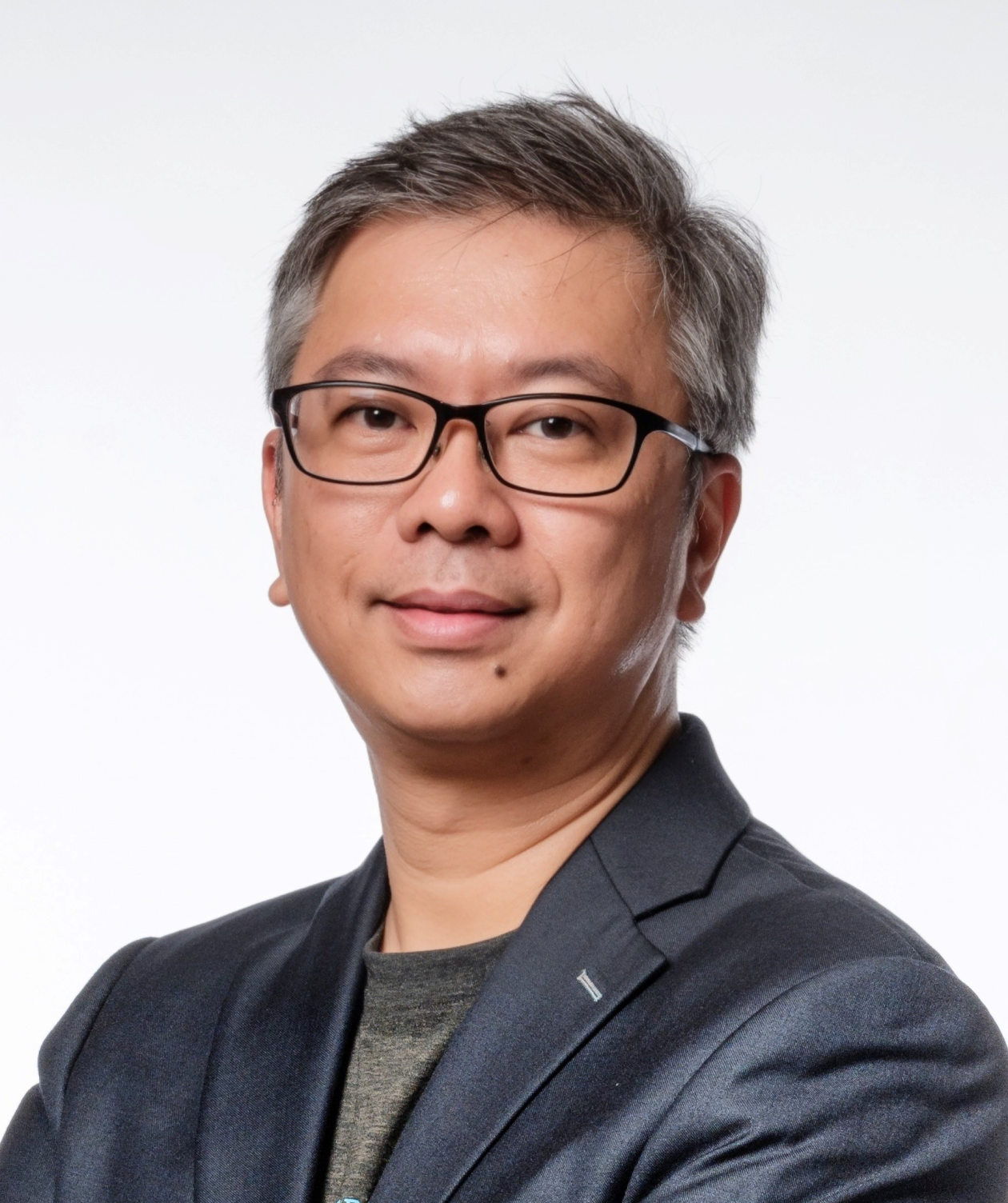
Prior to GovTech, he was an Operating Partner, Digital for Temasek, a global investment company headquartered in Singapore and part of the AI Strategy and Solutions team. Before that, he ran SP Digital, the digital business unit of SP Group. He also headed IT, OT and digital transformation for the whole of SP Group for more than 6 years. Sau Sheong was instrumental in changing SP Group from a traditional utility company to a regional energy player. In his 28 years of industry experience, he has built and led product engineering teams at PayPal, Yahoo and HP building various software products for enterprise businesses and consumers globally. He was previously a co-founder of a software company and was involved in startups for more than 10 years. He is active and contributes to many technology communities in Singapore and Southeast Asia and has written five programming books. Sau Sheong holds a bachelor’s degree in Computer Engineering, a Master’s in Commercial Law and a Postgraduate Certificate in International Arbitration.

Suthen is the Chief Technology Officer (CTO) of Grab. Based in Singapore, he oversees Grab’s technology teams across the company’s Deliveries, Mobility and Financial services businesses. As Grab’s CTO, Suthen is responsible for driving Grab’s technology vision, strategy and execution across the entire company. He plays a critical role in optimising Grab’s superapp synergies to drive sustainable growth and create greater value, convenience, and efficiencies for consumers and partners. Prior to this, Suthen was Chief Technology Officer of Mobility, Automation and Platform Excellence, Deliveries, and Experiences. He was also Grab’s first technical lead when the company was founded in 2012. Throughout his time at Grab, he led the development of many Grab products and platforms, which supported the rapid growth of Grab’s Deliveries and Mobility services. He also held operational leadership roles and founded the Business Operations team. His unique background in technology and operations closely mirrors Grab’s business, which connects offline services with online consumers. Suthen received a Bachelor’s degree in computer software engineering from Multimedia University in 2005, where he graduated with First Class Honours. He also received a Master’s degree in Public Policy in 2015 from the Harvard Kennedy School on a twin Fullbright Scholarship and Khazanah Global Scholarship.
Gregor rides the Architect Elevator from the engine room to the penthouse, automating serverless cloud solutions in the morning and preparing board presentations in the afternoon. He is known as co-author of the seminal book "Enterprise Integration Patterns" and the author for "The Software Architect Elevator". His articles have also been featured in Best Software Writing by Joel Spolsky and 97 Things Every Software Architect Should Know. He is an active member of the IEEE Software advisory board and Singapore MAS' International Technology Advisory Panel (ITAP). Gregor has served as Smart Nation Fellow to the Singapore government, as Technical Director in Google Cloud’s Office of the CTO, and as Chief Architect at Allianz SE, where he oversaw the architecture of a global data center consolidation and deployed the first private cloud software delivery platform.

Rachel is passionate about problem solving. Since joining Thoughtworks as a developer in 2010, she has taken on increasingly complex problems for our clients across the globe so that they’ve been able to deliver more value for their organization. As Chief Technology Officer for Thoughtworks, Rachel is responsible for the continued development and communication of the company’s technology strategy and vision which is ensuring they continue to be experts in the technologies and skills their clients need. Rachel has also been lucky enough to work in many countries during her time at Thoughtworks, including stints in the UK, Germany, India, Australia and the US. Those experiences have given her valuable insights into the breadth and variety of challenges facing our clients across the globe. She has been in the US since 2014, most recently as Global Managing Director of Enterprise Modernization, Platforms, and Cloud.
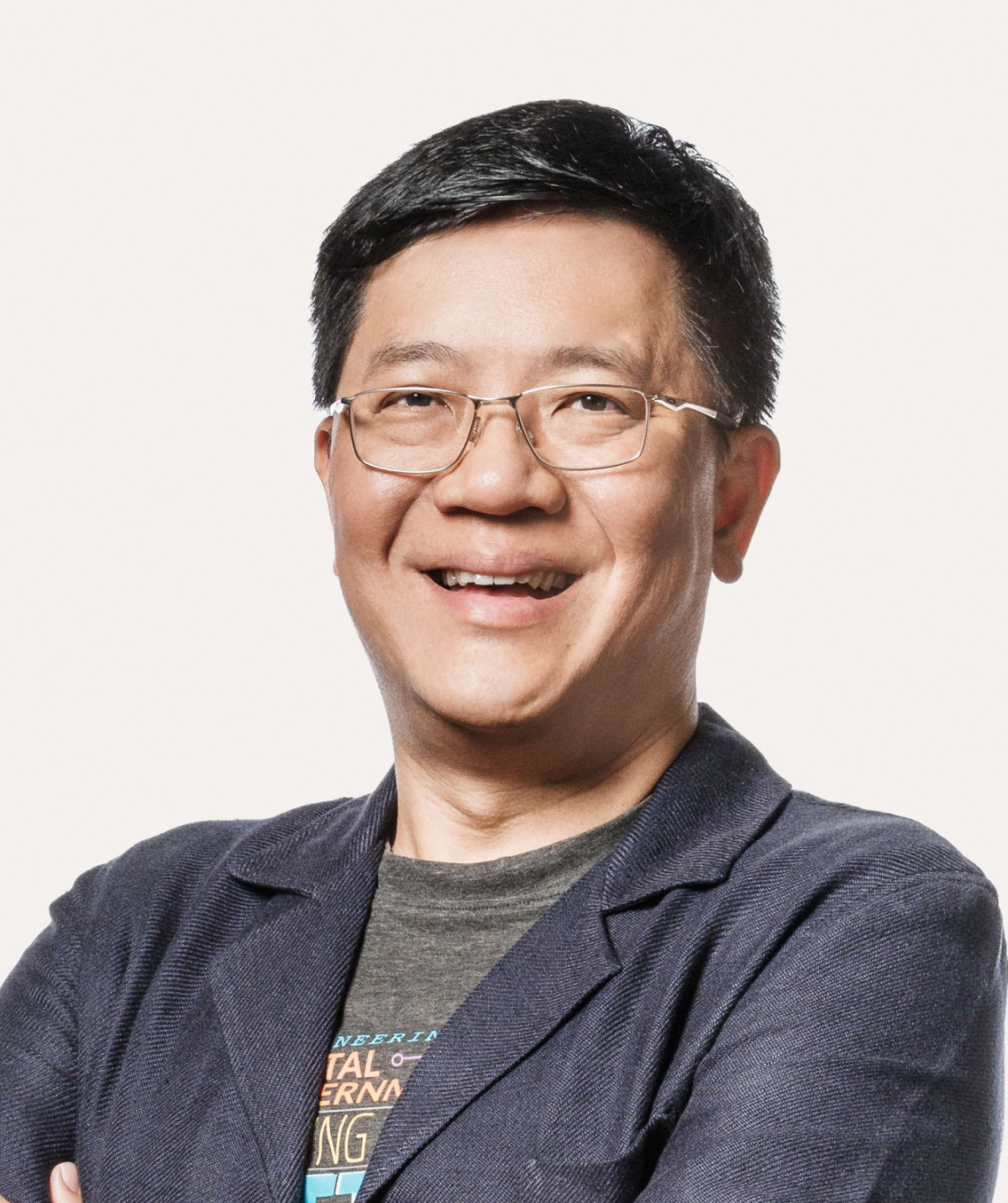
As the CIO of GovTech, Dominic is responsible for driving digital innovation. His team consistently explores opportunities to enhance business processes and productivity through technology. As the CIO of the agency overseeing the digitalization of the government, Dominic and his team serve as the incubator for innovative products before GovTech scales its solutions across the government. Concurrently, he holds the position of Assistant Chief Executive, Products, where he is responsible for leading the Technology Management Office. In this capacity, Dominic ensures the coherence and performance of GovTech's products. Since joining GovTech in 2018, Dominic led various product groups, including the National Digital Identity, TraceTogether Token for pandemic contact tracing, and Moments of Life. In the initial years, he was also concurrently the Practice Lead of Product Management and was instrumental in establishing the Design Thinking Community within GovTech. Before joining public service, Dominic amassed 15 years of experience in the electronics manufacturing service industry. He held the role of Senior Vice President of Operations for PCI Limited. In this capacity, he led operations across Singapore, China, and Indonesia, driving business and digital transformation and delivering innovative high-tech products for renowned brands in various industries. Dominic also gained experience in a digital start-up, managing products in greater China and later overseeing business operations in Russia and Latvia. Dominic holds a Degree in Engineering from Nanyang Technological University, a Master’s in Business Administration from the University of California Los Angeles and National University of Singapore, and has completed the Chief Product Officer Program at Stanford University.

Hunter is a Distinguished Engineer at the Government Technology Agency of Singapore, where he helps leads the Cloud and DevOps Centre of Excellence. Prior to joining the Government, he ran businesses in Asia and Australia focusing on Cloud Infrastructure, Digital Transformation, and R&D. He is a former CNCF ambassador and remains actively involved in various open-source foundations.

Eugene Lim is a Lead Cybersecurity Engineer and leads a security engineering team at Open Government Products to build elegant and effective security tools for developers.

I have been working as a software developer since 2004. I have led many technical teams to deliver products and platforms for our clients across different domains, with a strong focus on software quality and business outcomes. I live in Singapore with my family, where I enjoy the many outdoor activities such as rock climbing, cycling and kayaking that Singapore has to offer.

Nouman Memon is Technical Director, APAC Public Sector with two decades of industry experience as a developer, coding architect, and technical leader. He is passionate about tech for social change, free open source software, and equitable AI.

Trung Vo is a seasoned web developer, tech community builder, and recognised Google Developer Expert in Angular. As the founder of Angular Singapore, he leads initiatives to build and nurture the software developer community in Singapore. Trung frequently speaks at international tech conferences, sharing insights on modern development practices to make the web fast and delightful for end users. At Ascenda, he innovates towards loyalty programs for financial services worldwide, making rewards more accessible and driving a deeper understanding of customer behaviour.

Chloe is passionate about tech for public good and has spent over nine years in across various public sector domains. She has led multidisciplinary teams in developing innovative tech products impacting citizens and agencies.
Dr Ang Han Wei is currently a Cybersecurity Engineer with the Emerging Tech Research team in GovTech's Cybersecurity Group. Apart from his research in security implications of quantum computers, his previous experience as a data scientist fuelled his current interest in AI, and especially Large-Language Models. One of his objectives in his current role is to explore leveraging LLMs to improve the security posture of WoG environment. Han Wei's previous foray into the field of high energy physics during his graduate studies have equipped him with the ability to navigate the matrices, linear algebra and calculus prevalent in academic AI research. He strives to derive translational impact straddling LLM and cybersecurity. During his free time, he allows his mind to indulge in various contrived possibilities. In a previous attempt to analyse his sanity refuges of Netflix and YouTube with special relativity, he erroneously concluded that both apps have the ability to slow things down through space time given how quickly time passes in their presence.

Martin Weyssow is a Research Scientist at Singapore Management University (SMU) and member of the Centre for Research on Intelligent Software Engineering (RISE).His current research involves the design and implementation of advanced deep-learning-based methods to automatically detect software vulnerabilities, with an emphasis on large language models (LLMs), efficient learning and knowledge distillation techniques, and agentic frameworks involving LLMs. Prior to joining SMU, Martin completed his Ph.D. in Computer Science at DIRO, University of Montreal, Canada. His work, situated at the intersection of deep learning, natural language processing, and software engineering, aimed at better understanding the fine-tuning process of LLMs for code generation. His thesis includes work related to efficient fine-tuning for LLMs, strategies to address challenges related to data distribution shifts, and adaptation to user preferences in the context of code generation.
Dr. Ghim-Eng Yap is the Head of Data Engineering Practice at GovTech Singapore, the main technology agency for the Singapore government. His teams look at future data and AI technologies and set the technology standards in data for the Singapore public sector, enhancing agencies' data and AI readiness while overseeing data privacy protection across the whole of government. He also concurrently serves as the Head of Data Engineering & Data Infrastructure Program, leading the development and delivery of digital data infrastructure and products for the Singapore government.

Shi Wei leads the Data & Ecosystem Management Branch at IRAS, spearheading initiatives to enhance data and digital capabilities and foster ecosystem partnerships in tax administration. Prior to joining IRAS, Shi Wei held key positions in various Singapore government agencies. As Senior Assistant Director at the Ministry of Transport, he shaped aviation hub strategies, including air hub reopening, sector and workforce transformation, and decarbonisation initiatives. His experience also extends to fiscal and tax policy, where he served as the Head in the Fiscal Policy Directorate at the Ministry of Finance, playing a crucial role in developing COVID-19 support packages and contributing to the formulation of the national budgets. Shi Wei holds a MSc in Management Science and Engineering from Stanford University.
Scott is a software engineer at HDB, where he designs and implements central platform services using cloud-native technologies and automation tools to streamline operations across the organisation. He's dedicated to empowering teams to embrace and unlock new efficiencies on the cloud.
Wee Kiat is a software engineer at HDB, pioneering the DevSecOps model for agile cloud applications. He designs scalable, secure solutions aligned with micro-services architecture on the Government on Commercial Cloud (GCC), establishes automation pipelines, and ensures comprehensive testing and sustainable deployment. His work drives innovation and efficiency in HDB’s software development.

Fala is Lead UX Designer in GovTech. She strives to make complex digital world simpler by creating meaningful products that centered around the users; based on research insights and user behaviours, focusing on humans and platforms interactions, and refining it through iterative design. At the same time, educating stakeholders on the process and true value of UX.

As an Applied Scientist at Microsoft, Brian specializes in improving both the wellbeing and productivity of our internal engineering teams. His mission goes beyond just metrics; it’s about humanizing the workplace. Researching tooling, processes, and cultural dynamics, Brian has successfully implemented strategies that not only boost efficiency, but also foster a collaborative and satisfying work environment. Brian's approach is human-centered, focusing on empowering each developer to realize their full potential. This philosophy has led to multiple company-wide initiatives and policies that have measurably enhanced team dynamics and productivity. His passion lies in continually exploring innovative ways to improve our work culture, ensuring that every individual feels valued and motivated.
Shalom Chin is an Accredited Kanban Trainer and a Kanban Coaching Professional, with specialized knowledge in Business Agility and Product Management. He has a track record in guiding teams to develop products in the areas of web development, cloud computing, data warehousing, and machine learning. He possesses unique experiences in various sectors ranging from FnB, Social Media, FinTech, and Talent Acquisition. As an Agile Coach at a global biopharmaceutical company, he is transforming the landscape of IT operations by helping teams adopt new ways of thinking and working. In his leisure time, he enjoys wine tasting and getting new ideas from reading management books.

Henry is a lead product manager in Government Digital Products Platforms team, where he leads product development of the Content Management platform. With over 20 years of diverse industry experience across product management and technical development on global products across multinational organisations. He is passionate about building products that makes technology accessible for improving everyday lives.

Jon is a seasoned engineer working in the observability and security space. He is keen to learn and share how new technologies can make a difference in our lives.

Abi Noda is the founder and CEO at DX, an engineering intelligence platform designed by leading researchers. In addition to DX, Abi runs the Engineering Enablement newsletter and podcast covering the latest research on developer productivity. Prior to DX, Abi was the founder and CEO of Pull Panda, which was acquired by GitHub in 2019.
Chi Fa is C4X Military Expert who originally started his military journey as a Military Intelligence Expert. After graduating from NUS Com Sci, he transitioned into a Software Engineering role. During a one year secondment to Open Government Products, he was a part of the FormSG and Signify Team, where he worked on various features such as FormSG React Migration, FormSG Payments, FormSG Charts, Signify mobile and APIs. Currently, he is a full stack engineer in the Pinpoint Team in DOTC.

Wasim El-Omari is a Distinguished Security Field CTO at Snowflake, he is based in Australia, working in a Global Team security CTOs. Wasim has more than 25 years of experience in Cyber Security. He has a background in Security Operations, Incident Response, Digital Forensics and Cloud Security. He has Bachelor’s Degree in Electrical Engineering in Telecommunications and a Master’s Degree in Information Security with a focused interest in Data Governance, Risk Management & Incident Handling. Wasim is a former CISO, serving board member on several Fintech and cyber start-ups. He continues to focus on building best in class security platforms and strategies. He has deep interest and experience in modern GenAI platforms, data architectures and the data security practices required to secure and govern them. His career has taken him globally to different regions and has worked with Fortune 100 companies and government bodies to design, build and validate effective security programs.

Vern Hui is a DevOps Engineer at GovTech, specialising in the development and management of SHIP-HATS products with a strong focus on AWS cloud solutions. He is also passionate about optimising infrastructure, automating workflows, and enhancing the efficiency and security of government technology services.

Muhammad Arif is a DevOps and SRE specialist with 10+ years of experience. He is passionate about building reliable, scalable systems and automating processes to keep things running smoothly.

Dr. Sakthivel heads the Solution Architect Office (SAO) in GovTech and drives GovTech-managed agencies' application architecture strategy, systems development, and manages the solution architect team. He successfully led the Government on Commercial Cloud adoption programme by providing cloud application consultancy to agencies to migrate their systems to the cloud and application modernisation programs. He is currently driving the Gen AI adoption in Singapore government agencies through multiple initiatives. Dr. Sakthivel has more than 25 years of industry experience in architecting, designing and developing large-scale application systems.
Kevin is an accomplished global tech leader with over 20 years of technology experience. He has significant experience in launching new technology capabilities, as well as growing new product and engineering teams. At GovTech, he leads the product and engineering teams for Government on Commercial Cloud (GCC), Singapore Government Tech Stack (SGTS) and a whole series of products that support product development communities such as Maestro (an MLOps platform for ML community) and Singapore Government Design System (for UX community), and SHIP-HATS (for DevOps community).

A passionate architect and product manager, Bing Wan started his career as a software developer focusing on both banking and shipping domains. He developed a passion in IT infrastructure, security and operations, which guided his subsequent work as an infrastructure architect even as the landscape shifted from on-premise/physical, virtualisation to cloud. His most recent role as Director (Government on Commercial Cloud) further honed his skills in enabling fellow professionals to re-factor systems, IT operating model and culture to Commercial Cloud. His current interest and focus area is on cloud automation/software defined infrastructure setup and operations strategy across Singapore’s whole-of-government.

With a robust background spanning 8 years in the tech industry, Shan is an expert in both software engineering and DevOps engineering. In the first 3 years of his career, Shan made significant contributions to open-source projects and excelled in developing compilers and plugins. This solid foundation in software engineering is complemented by 1 year of hands-on technical support experience, providing a well-rounded understanding of user needs and system troubleshooting. Transitioning into DevOps, Shan has spent the last 4 years mastering AWS, Infrastructure as Code (IaC), CI/CD pipelines, and Kubernetes. Shan's expertise ensures efficient, scalable, and reliable software delivery processes. With a unique blend of development, support, and operational skills, Shan is a dynamic speaker who can provide deep insights into modern software and DevOps practices.

Denise is a product manager who leverages her background in business development to creative effective solutions. Having worked closely with development teams, she contributes to shaping management tools that aim to improve efficiency and user experience. With a focus on practical problem-solving, she desires to create practical solutions that meet user needs and enhance overall performance.
Shiling is a senior software engineer at GovTech. She leads a team of software engineers building business workflows for Singapore Government Tech Stack (SGTS) products. Her team grapples with the challenge of finding harmony in a chaos of different product business models and technical requirements to build systems which are easily extensible. Prior to joining GovTech, she built software for banking systems and video games.

Cheng Yong is a lead software engineer at GovTech. He leads a team of software engineers with product mindset in Singapore Government Developer Portal, focusing on discoverability and accessibility of Whole-of-Government digital services. Currently, he is working with SGTS product teams to deliver a unifying experience for their users with Developer Console. Prior to joining GovTech, he had experience in creating frameworks and tools for engineers - whether it is design system for better collaboration between designers and engineers, or building reusable services for different product teams.

Emmanuel has spent nearly 30 years working with clients in EMEA and APAC to build innovative solutions to complex, transformative business requirements putting customers/constituents and employees at the centre.

Julian Kam is currently a Senior Cloud Infrastructure Engineer in the Core Engineering Products division at GovTech. As the Deputy Chief Architect for the implementation of GCC+, Julian led in the design, testing and operationalising of the Government on Commercial Cloud Plus (GCC+) hosting platform which was launched in July 2023. Prior to this, he was the Service Development Lead for the Singapore Government Private Cloud (GPC) which was launched in June 2018. Having joined the GPC team in June 2017, he led several technical tracks in reviewing the architecture and technical design of GPC to meet the requirement of Singapore Government. Julian has over 17 years of ICT experience working in Singapore. Prior to joining GovTech, he held various positions in the private sector from System Engineer to Technical Account Manager. Julian holds a Bachelor degree in Information Technology from Monash University.

Transforming visions into reality, I am a trailblazing Director of Engineering with a 15-year journey of pioneering advanced technologies and leading teams to excel in the fast-paced world of engineering.

Engineering leader passionate in architecture, design and development of scalable systems on cloud infrastructure. Also, have extensive experience in building products and platforms empowering engineering teams.
In his current role with the AI Products team, he works to bake Generative AI into products and employ various innovative techniques to tackle challenges on information and knowledge access within the organisation.
As a data engineer in the AI Products team, he integrates AI solutions such as vector data pipelines, and RAG applications to enable novel ways to capitalise on troves of enterprise data.
Qin Yan is a Public Sector Senior Solutions Architect at Amazon Web Services. In the past 10 years, he works with developers, infrastructure engineers and C-level executives in government agencies to build and operate innovative solutions for citizens, businesses and public officers. At AWS, he also specialises in resilience of cloud applications.